

IT company uses
GanttPRO’s flexibility
for long-term project planning
“I like the philosophy behind the Gantt chart. It’s ideal for long-term big and complex projects.”
A story about how GeoGuard uses GanttPRO to plan long-term DevOps projects and balance resource workload with a Gantt-based approach.

Company overview
Сompany: GeoGuard (GeoComply)
Role interviewed: Rostislav Chernichenko, Head of Infrastructure & PM of the DevOps team
Project types: long-term complex DevOps and infrastructure projects
External pressures: long timelines up to 3 years, dependency risk on key specialists, strict deadlines, changeable workload
Tool history: Excel
Problems hinted at: lack of resource and workload tracking, difficulty distributing workload correctly, lack of standard PM features
Summary
Company Background
What does your company focus on?
We work in the gambling sphere in the USA. We deal with geolocation and person identification. The company is headquartered in Canada.
If our product worked at full capacity in your country, I would know 100% even without video that I was talking exactly to you, not your colleague, say, support specialist.
”With GanttPRO, we do everything right. The service perfectly allows us to see the resource workload.”
Struggle
How did your approach look before GanttPRO?
I have tried a bunch of products. Mainly those that are based on Gantt charts. I haven’t been satisfied with lots of different things in them: some did not allow assigning resources and tracking workload, some lacked basic features. It annoyed me a lot and I had a hard time trying them.
Then I came across your product. And it perfectly hit the target. It was awesome! GanttPRO offered everything that I needed plus lots of other perks. Flexible, top-notch. What I liked most is that the Gantt chart approach itself is delivered as it should be delivered, in that original way that meets my needs. I guess, the needs of the majority of professional project managers.
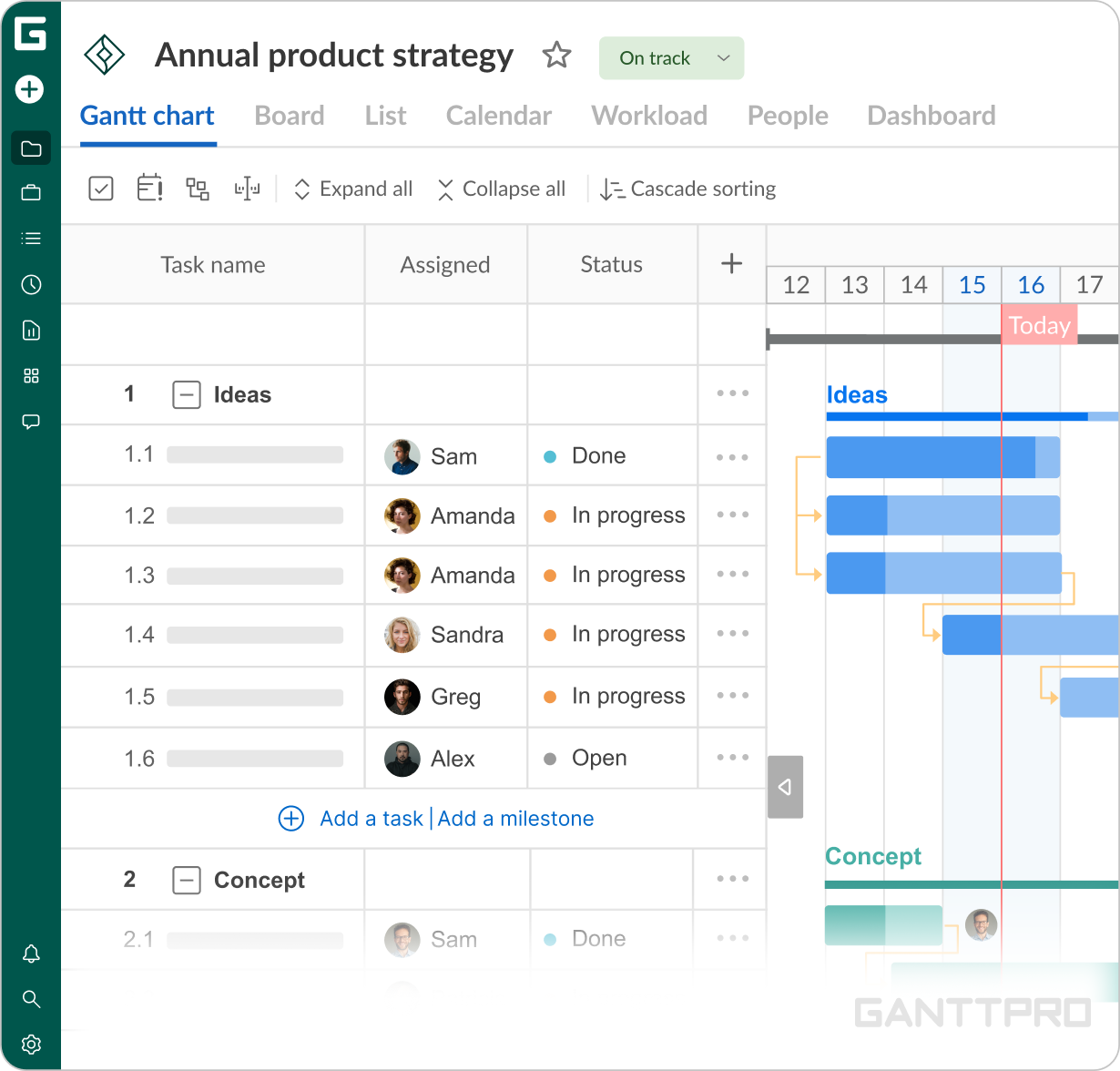
Previously, I used Excel or other tools to work with a Gantt chart. But when we were planning complex projects, we found GanttPRO. We were happy with it and purchased the subscription right away for all the project managers in the company.
“I like the philosophy behind the Gantt chart. It allows for creating long-term, big, and complex projects.”
Solution
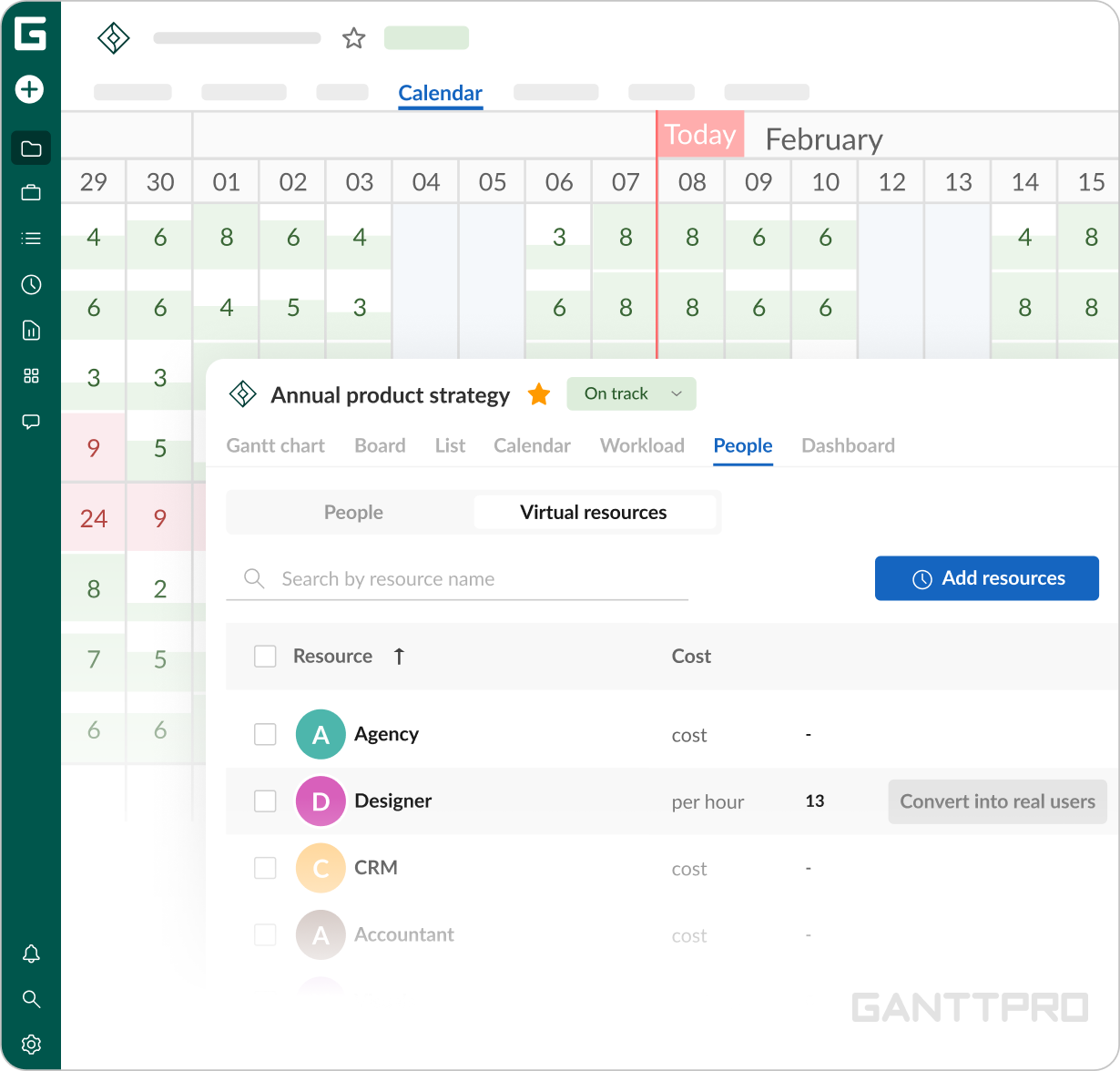
Currently, all of our project managers use the tool, especially to plan the workload using virtual resources. Shortly, I am planning to show GanttPRO to the team and step by step add members in our projects. I will tell them how to plan the time and activities and after that, when they will be ready to start working on the projects, I will replace our virtual resources with real team members.
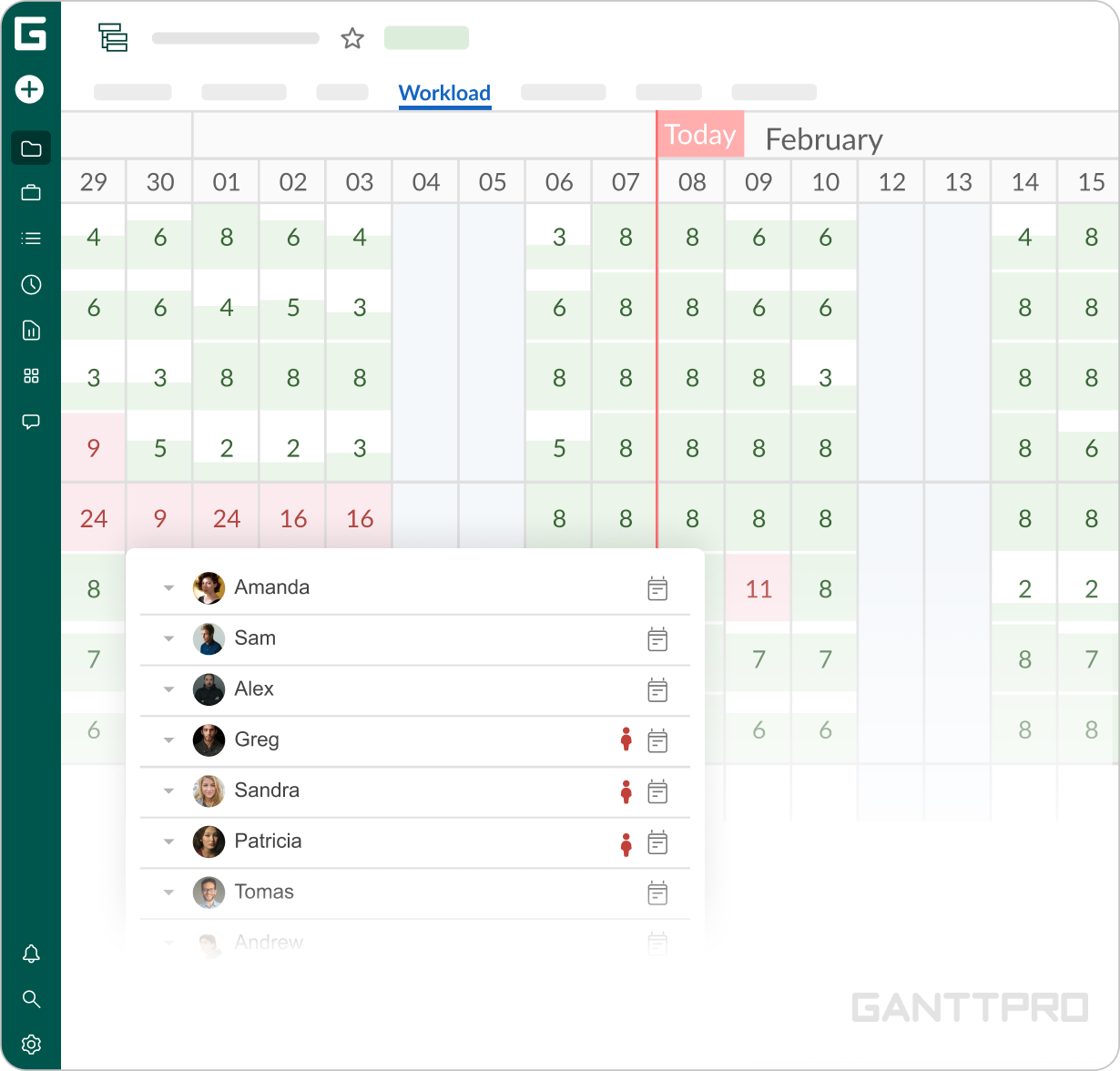
To tell the truth, it does not matter what plans and projects you are going to manage. There is one goal - to properly distribute work to team members and resources.”With GanttPRO, we do everything right. The service perfectly allows us to see the resource workload.” What concerns me, I had three big projects. With GanttPRO, I correctly distributed the workload to the resources we had.
”With GanttPRO, we do everything right. The service perfectly allows us to see the resource workload.”
We successfully delivered two projects. The third one needed a break because one of our key specialists left the company. On the diagram, I was able to immediately see how sudden changes could affect the whole product.
In project management, there are 10 golden rules. One of them says: if something went wrong, the best you can do is to stop. That’s why we temporarily froze the project.
“As soon as we have a new resource, with the help of GanttPRO, we’ll restore the project and continue working Right now, I am simultaneously planning four new projects. One is short-term, two are long-term. One of them takes more than two years.”
In general, we have long-term projects. For example, now, we are changing the platform for our product. And as our investor says, one of the key goals is a forward-looking approach. We should plan 2-3 years ahead. It makes sense because the workload in long-term projects is going to expand.
Impact
Why do you personally and your company prefer Gantt chart in GanttPRO?
My personal belief is that Agile works great when you have a startup. By the way, experienced and certified (PMI, MBA) managers support this idea. Roughly speaking, it is great for situations when you move promptly from point A to point B, do it here and now.
I am experienced enough in planning and managing. I was a technical specialist, then I managed my own company, then I became a consultant. I always give a clear example of house building and tell about the processes.
What do we do to build a house? We hire an architect who designs, say, a two-story house. You plan the processes based on the number of stories: before choosing the roof, you should take into account the foundation. Then, we go on with walls and consider all the project details during the construction process. This is how the Gantt chart-based planning works.
How does Agile work? We need to build a house. Ok, let’s start with the foundation. Done. Walls come next. Maybe, we’ll add one more story? No, this is not possible because, during the first sprint, we didn’t consider that and poured concrete for the foundation of a one-story house.
Not long ago, I spoke with Chris Croft. He is one of the UK’s leading project management trainers. Chris provided lots of real examples of how projects failed because managers had chosen cool and modern Agile. It doesn’t work for big projects.
Probably, it works for outsourcing companies when a client is in charge of project management and you just get smaller tasks.